SLAVE TRADE WAS THE BEGINNING OF YAHOO YAHOO?
THE DARK HISTORY OF DECEPTION, EXPLOITATION AND MODERN CYBERCRIME
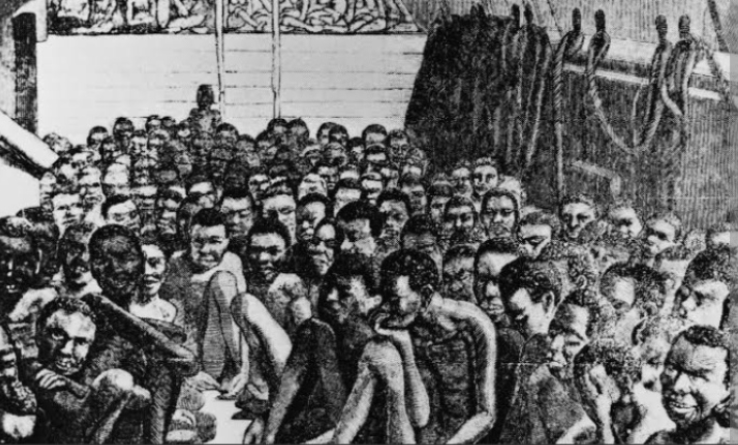
There is a disturbing question that deserves serious historical and philosophical examination: can the modern Nigerian phenomenon popularly called “Yahoo Yahoo” be understood as a new expression of an old culture of deception, manipulation and economic exploitation that characterised the Atlantic slave trade? Strictly speaking, history does not establish that Yahoo Yahoo literally began with the slave trade, because internet fraud is a modern form of cybercrime that emerged with digital communications and electronic commerce. Yet there is a powerful historical analogy that deserves attention. The Atlantic slave trade was built around the conversion of human beings into commodities, the manipulation of vulnerable populations, coercion, deception and the pursuit of enormous economic profit. The modern Yahoo Yahoo criminal does something fundamentally different but morally comparable in one respect: he deliberately manipulates another human being in order to obtain money or property through deception. The difference between the two should never be erased. The slave trade involved organised systems of enslavement, kidnapping, forced transportation, brutal confinement, forced labour and hereditary exploitation on a massive scale, while internet fraud involves deliberate deception for unlawful financial gain. The Trans-Atlantic Slave Trade Database estimates that more than 12 million Africans were forced onto Atlantic slave ships, with millions transported to the Americas. The history therefore demands precision: Yahoo Yahoo did not historically “start” with slavery, but the slave trade provides one of the darkest historical examples of what happens when human beings are viewed primarily as instruments of economic gain. That moral lesson is relevant to contemporary Nigeria because a society that begins to celebrate wealth without asking how it was obtained risks producing another generation for whom deception becomes a legitimate pathway to material success.
The Atlantic slave trade itself was not a simple story of Europeans arriving in Africa and peacefully buying people who had volunteered to become labourers. It developed through a complex and violent commercial system involving European shipping and commercial interests, African political authorities, merchants, brokers, warfare, raiding, kidnapping, judicial enslavement and the capture and sale of prisoners. Historical scholarship also shows that African actors participated in supplying captives to European traders, although this fact must never be used to obscure the enormous European and American commercial demand that sustained and expanded the Atlantic system. The SlaveVoyages historical project records the involvement of African trading networks and European merchants and shipping interests, while also documenting the enormous scale of the forced movement of Africans across the Atlantic. European demand for labour in plantations producing commodities such as sugar and tobacco created powerful economic incentives for the continued trafficking of human beings. Captives were transported to the coast, confined in barracoons and forts, placed aboard ships and carried across the Atlantic under conditions that subjected them to violence, disease, starvation, separation from families and death. In the Americas, enslaved Africans were compelled to labour in plantation and other economic systems from which European and American commercial interests derived enormous wealth. The important point for the Yahoo Yahoo comparison is not that the two systems were identical; they were not. The point is that the history of slavery demonstrates how dangerous economic systems become when profit is placed above human dignity. The slave trade represents one of history’s clearest examples of organised exploitation in which the humanity of victims was subordinated to economic calculation. The modern fraudster reverses the technology but not the moral lesson: instead of chains and ships, he may use phones, emails, social-media accounts, fake identities, false business proposals, romantic manipulation or fabricated investment opportunities. The instrument has changed; the principle of dishonest economic exploitation remains morally unacceptable.
Modern Yahoo Yahoo operates through an entirely different technological environment, but its central mechanism is deception. A fraudster may create a false identity, send an attractive business proposal, advertise goods that do not exist, impersonate another person, establish a fraudulent romantic relationship, manipulate a victim psychologically or send a fabricated investment opportunity designed to make the target voluntarily transfer money. The victim may be anywhere in the world, while the criminal may operate from Nigeria or another country, making cybercrime a transnational phenomenon. Nigeria’s EFCC has repeatedly described and prosecuted such internet-fraud schemes, including romance scams, business-email compromise, impersonation, fraudulent online purchases and other forms of obtaining money by false pretences. The Commission has even documented the existence of organised “Yahoo Yahoo academies” where suspected criminals allegedly taught others techniques for online fraud. This is where the philosophical danger becomes particularly serious. When a young person begins to regard fraud as intelligence, when fraudulent wealth is interpreted as success, when expensive cars and houses become more important than the means through which they were acquired, society begins to reverse its moral vocabulary. The criminal is no longer ashamed; he becomes an object of admiration. Some communities may celebrate unexplained wealth, some young people may imitate those who display sudden riches on social media, and parents may sometimes ask less about the source of wealth than about the benefits that wealth brings. The EFCC has itself published concerns about the social celebration of internet fraud and has noted that involvement in cybercrime is not confined to young people from poor families. Poverty, unemployment and inequality may form part of the social environment in which cybercrime develops, but they cannot morally justify fraud. A poor person who refuses to steal remains morally different from a wealthy person who deliberately deceives others, and a society must never teach its youth that hardship gives them permission to exploit innocent people.
The most important lesson, therefore, is that both the slave trade and Yahoo Yahoo should be understood through the concept of human dignity. The slave trader looked at a human being and saw labour, property and profit; the modern cybercriminal looks at an unsuspecting victim and sees an opportunity for money. Both systems, despite their enormous differences, raise the philosophical question of what happens when economic gain becomes more important than the humanity of another person. But historical responsibility must remain clear: the Atlantic slave trade was a vast international system involving European imperial and commercial powers, African intermediaries and American plantation economies, and it cannot accurately be reduced to a simple story of “the West deceiving Africa.” Africans were victims, captors, traders, resisters and participants in different parts of the system, while European powers played major roles in organising maritime transportation, financing and expanding the Atlantic commercial system. Likewise, contemporary cybercrime should not be presented as something genetically or culturally predetermined by Nigerian youth. The overwhelming majority of Nigerian young people are not Yahoo boys; millions pursue education, professional careers, entrepreneurship, agriculture, technology, public service and legitimate businesses. The real danger is the normalisation of fraud as a lifestyle. When fraudulent wealth is publicly celebrated, when victims are mocked rather than sympathised with, and when criminal sophistication is mistaken for intelligence, society creates an environment in which dishonesty can reproduce itself. The response therefore cannot be limited to arrests. Law enforcement must continue to investigate and prosecute cybercrime, but families, schools, religious institutions, communities, technology companies and the state must simultaneously rebuild the moral understanding that legitimate wealth comes from legitimate value creation. The EFCC’s documented campaigns against internet fraud show that enforcement is already an important part of the response.
FAKE FOOD AND DRUGS: NIGERIANS DEMAND ACTION AS ACTRESS MARY NJOKU CHALLENGES NAFDAC BOSS
The final message must therefore be uncompromising: slave trading was wrong, and Yahoo Yahoo is wrong; slavery cannot be romanticised, and cybercrime cannot be celebrated. The historical comparison should not be used to establish a literal genealogy that historians cannot prove, but it can serve as a powerful warning about the destructive consequences of treating other human beings merely as instruments for personal economic advancement. The slave trade left Africa with demographic, psychological, political and economic scars whose consequences continue to be studied by historians; Yahoo Yahoo leaves victims financially devastated, emotionally traumatised and sometimes exposed to severe personal consequences, while also damaging Nigeria’s international reputation and undermining trust in legitimate Nigerian businesses and digital transactions. The lesson from both histories is that intelligence without morality can become manipulation, wealth without legitimacy can become exploitation, and economic ambition without conscience can destroy the social fabric that makes economic life possible. Nigeria’s young people must therefore be taught that the real measure of success is not the ability to deceive another person, but the ability to create something valuable without destroying another person’s dignity. The slave ship and the smartphone belong to completely different historical worlds, but both histories can provoke the same fundamental philosophical question: what kind of society do human beings create when profit becomes more important than humanity? Nigeria’s answer to that question should be a decisive rejection of slavery, fraud, cybercrime and every culture that celebrates wealth without asking whether the wealth was honestly earned.
Like Our Story ? Donate to Support Us, Click Here
You want to share a story with us? Do you want to advertise with us? Do you need publicity/live coverage for product, service, or event? Contact us on WhatsApp +16477721660 or email Adebaconnector@gmail.com