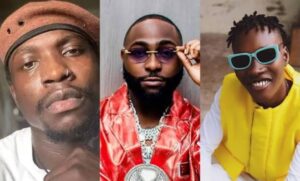

Enioluwa Defends Male Attendees, Warns That Public Criticism And Negative Narratives Could Put People’s Lives At Risk As Nigerians Take Sides
Former Big Brother Naija housemate Tokunbo Idowu, popularly known as TBoss, has sparked a heated debate following her criticism of some men’s unconventional outfits at the 2026 GTCO Fashion Weekend in Lagos. In a social media post on Monday, November 9, 2026, the reality TV star expressed concern over what she described as the growing loss of masculinity in the name of expressive fashion. However, Nigerian media personality and influencer Enioluwa Adeoluwa disagreed with her position, arguing that fashion shows are platforms for creativity and personal expression, not occasions to ridicule people for their appearance. Enioluwa subsequently warned that the narratives people promote online could expose others to hostility and endanger their safety. The disagreement has attracted further reactions, including a strong response from social media personality Izzy Ogbeide, turning a fashion exhibition into a wider conversation about masculinity, personal identity, freedom of expression and society’s expectations of men.
TBOSS EXPRESSES DISAPPOINTMENT OVER MEN’S BOLD FASHION CHOICES
Former Big Brother Naija housemate TBoss has criticised some of the unconventional fashion choices showcased by male attendees at the recently concluded GTCO Fashion Weekend in Lagos, questioning what she considers an increasing departure from traditional masculine dressing.
Reacting to videos and pictures of men appearing in daring and feminine-inspired outfits at the fashion event, the reality TV personality took to her Instagram page on Monday, November 9, 2026, to express her displeasure.
In her reaction, TBoss wrote “This is not okay. We’re slowly losing our men all in the name of expressive fashion. This is truly sad.”
Her statement quickly attracted attention, particularly because it touched on an issue that has continued to generate different opinions in Nigerian society, whether men should be expected to maintain traditional standards of masculine dressing or be allowed to explore fashion without restrictions.
For TBoss, the issue goes beyond wearing unusual clothes. Her concern appears to centre on what she considers a gradual shift in the way masculinity is being expressed through contemporary fashion.
However, her position has not gone unchallenged. While some Nigerians agree that certain fashion choices challenge traditional cultural expectations, others believe that clothing should not determine how society judges a man’s identity, character or masculinity.
What began as a reaction to a few fashion photographs has consequently developed into a broader debate about personal expression, cultural values and the freedom to dress differently.
HOW GTCO FASHION WEEKEND SPARKED THE CONTROVERSY
The controversy followed the ninth edition of the GTCO Fashion Weekend 2026, organised by Guaranty Trust Holding Company.
The two-day event took place on Saturday, November 7, and Sunday, November 8, 2026, at the GTCentre, Plot 1, Water Corporation Drive, Oniru, Lagos.
Tagged “Fashion Is Timeless,” the event brought together fashion designers, models, entrepreneurs, celebrities, fashion enthusiasts and other creative industry professionals.
It was designed to celebrate African fashion, encourage creativity, promote emerging designers and provide business opportunities for entrepreneurs within the fashion industry.
The 2026 edition featured runway presentations by 12 designers from Africa and beyond, alongside fashion masterclasses, retail exhibitions and a dedicated Streetwear Hub.
Among the designers featured were Tongoro, FIA Factory, Ibrahim Fernandez, Washington Roberts, Maison Sara Chraibi, Imane Ayissi, Sukeina, House of Marvee, Selam Fessahaye, Kim Shui, Ohlanna Bu Zikora and LaQuan Smith.
The event also featured 140 curated fashion retail outlets, providing opportunities for fashion businesses to showcase their products and connect with potential customers.
However, beyond the designers and their collections, some male attendees attracted considerable attention because of their unusual fashion statements.
Videos circulating online showed men embracing daring styles, unconventional cuts, feminine-inspired clothing, accessories and other expressive fashion choices that challenged conventional ideas of masculine dressing.
Some of the outfits featured designs that exposed parts of the body, while others incorporated accessories and styling traditionally associated with women’s fashion.
The images quickly became subjects of discussion, with some social media users questioning whether the outfits represented creativity or an unnecessary departure from traditional masculine dressing.
It was against this background that TBoss expressed her dissatisfaction, describing the development as sad and suggesting that society was gradually losing its men.
Interestingly, the event itself was organised to celebrate fashion as an expression of creativity, culture and identity. The controversy emerged from public interpretations of selected outfits rather than an official statement by the organisers about masculinity.
ENIOLUWA ADEOLUWA FIRES BACK, DEFENDS MEN’S FREEDOM OF EXPRESSION
While TBoss’s comments attracted support from Nigerians who share her concerns about changing fashion trends, media personality and influencer Enioluwa Adeoluwa has taken a different position.
On Tuesday, November 10, 2026, Enioluwa reacted to the growing criticism in a series of posts on his verified X account, questioning why some social media users were deliberately selecting videos of men dressed unconventionally and using them to suggest that society was losing its men.
According to him, critics were ignoring the many other male attendees who appeared in conventional shirts and trousers at the same event.
Expressing his disagreement, Enioluwa wrote “It’s interesting how people attend fashion shows, pick out videos of men dressed a certain way, put them together, and suddenly the conversation becomes, ‘We are losing our men.’
“Meanwhile, that same fashion show has plenty of men wearing regular shirts and trousers, but those videos rarely get the same attention.
“It is a FASHION SHOW. A FASHION SHOW! Nobody is losing anything.”
His argument was that fashion events provide opportunities for designers and attendees to experiment with different styles, and people should not be ridiculed simply because their choices do not conform to conventional expectations.
He further challenged those who were uncomfortable with the outfits to seek out environments where they could find men who matched their preferred definition of masculinity.
Enioluwa added “If you want to see men who fit your definition of ‘masculinity,’ go to a stadium on a Saturday, visit the gym near your house, and have a field day.”
Beyond defending the fashion choices, the influencer raised concerns about the possible consequences of the narratives being promoted on social media.
According to him, people should be careful about the messages they spread, especially when such messages could expose individuals to hostility, ridicule and threats to their safety.
He stated “We really need to be more mindful of the narratives we push, especially when we know, and have seen, how these narratives can put people’s lives and safety at risk.
“There are things we all dislike or disagree with about other people, but that doesn’t give us the right to ridicule them or encourage hostility towards them.
“You have a platform. Use it responsibly.
“Leave people alone!”
His intervention shifted the conversation from whether the outfits were acceptable to a broader question about the responsibility of social media users when commenting on other people’s appearance and personal choices.
For Enioluwa, people are entitled to their opinions, but disagreement should not become an excuse for public humiliation or hostility.
ENIOLUWA ALSO QUESTIONS THE PUBLIC MOCKERY OF MEN IN CREATIVE PROFESSIONS
Beyond the controversy surrounding GTCO Fashion Weekend, Enioluwa extended his criticism to the practice of recording and ridiculing men whose appearances or mannerisms do not conform to conventional expectations.
He questioned why some content creators deliberately film men working in hair salons, tailoring shops, fashion design and other creative professions, only to circulate the videos online for entertainment and engagement.
According to him, these individuals have been working in their respective professions for years, yet some people suddenly treat their appearance and mannerisms as reasons for public outrage.
He argued that such individuals are simply trying to earn a living and should not be turned into subjects of ridicule.
Enioluwa also encouraged men who frequently become targets of such content to be cautious about interviews with people whose intentions might be to generate controversy rather than represent them fairly.
His comments reinforced his position that people should be allowed to express themselves without being subjected to unnecessary public embarrassment.
The influencer’s argument also highlights a wider issue concerning social media culture, where unusual appearances and controversial statements can quickly become viral content, sometimes at the expense of the individuals involved.
IZZY OGBEIDE JOINS THE CONTROVERSY, REBUKES TBOSS OVER HER COMMENTS
The disagreement took another turn when Nigerian social media personality Izzy Ogbeide openly criticised TBoss’s position.
Izzy faulted the reality TV star for publicly expressing displeasure over men embracing feminine-inspired fashion, warning that such criticism could contribute to hostility against individuals who dress differently.
In a strongly worded response, Izzy urged TBoss to allow men to express themselves without turning their fashion choices into a subject of public condemnation.
She said “TBoss, shut up your mouth. Before you understand it, people go around hurting these people. I want Nigerian men to be themselves.
“You know how many women are suffering in marriage because they ended up with men secretly attracted to men.
“TBoss, shut up your mouth. Leave them alone. Let them express themselves.
“Dressing like women doesn’t stop them from being good men in society.
“Don’t bring harm to these people. Leave them alone. Let the men express themselves.”
Izzy’s argument was that clothing choices should not be used to determine whether someone is a good man or a responsible member of society.
She also raised concerns about the possibility of public criticism encouraging discrimination or hostility towards men whose fashion choices do not conform to conventional expectations.
Her comments introduced another sensitive dimension to the conversation by connecting fashion, personal expression, relationships and the consequences of concealing one’s identity because of societal pressure.
TBoss, however, maintained her position, insisting that she had the right to express her opinion on a public platform and rejecting the suggestion that her comments were intended to encourage violence.
The exchange further intensified the controversy, with the disagreement now involving not only fashion and masculinity but also freedom of expression and personal safety.
PROFILES OF THE PERSONALITIES INVOLVED
TBOSS, THE REALITY TV STAR WHO SPARKED THE DEBATE
Tokunbo Idowu, popularly known as TBoss, is a Nigerian reality television personality who rose to prominence following her participation in the 2017 edition of Big Brother Naija.
She became one of the most talked-about housemates during the second season of the reality television show, which attracted considerable attention because of its entertainment, personality clashes and dramatic developments.
TBoss finished as the second runner-up in the competition, establishing herself as one of the recognisable personalities from that edition.
Her time in the house generated considerable public discussion, with her outspoken personality, confidence and disagreements with fellow housemates contributing to her popularity.
Following her participation in the show, she maintained a presence in the entertainment industry through public appearances, social media engagement and other media-related activities.
She has also become known for expressing strong opinions on social issues, relationships, lifestyle and entertainment controversies.
Her latest comments about men’s expressive fashion have once again placed her at the centre of public discussion.
ENIOLUWA ADEOLUWA, THE INFLUENCER CHALLENGING TRADITIONAL FASHION EXPECTATIONS
Enioluwa Adeoluwa is a Nigerian media personality, actor, content creator, influencer and public speaker.
Popularly known as Enioluwa or the “Beauty Boy”, he has built a strong presence in Nigeria’s entertainment and digital media industry through content centred on lifestyle, fashion, grooming, beauty and personal development.
He began creating digital content in 2019 and gained wider recognition in 2020 after some of his videos went viral.
Enioluwa studied Theatre and Media Arts at Ekiti State University, where he graduated with a first-class degree at the age of 19.
He subsequently obtained a master’s degree in Marketing Communications from Pan-Atlantic University’s School of Media and Communication.
His growing popularity has earned him collaborations with brands and opportunities within the entertainment and fashion industries.
He is particularly known for challenging conventional expectations about how men should present themselves, frequently embracing fashion, beauty products and grooming practices that are not traditionally associated with Nigerian masculinity.
His latest defence of men wearing unconventional outfits at GTCO Fashion Weekend is consistent with his public advocacy for personal expression and freedom from unnecessary social judgement.
For Enioluwa, the issue is not whether everyone must appreciate a particular fashion choice, but whether people should be subjected to ridicule or hostility simply because they dress differently.
IZZY OGBEIDE, THE SOCIAL MEDIA PERSONALITY WHO CHALLENGED TBOSS
Izzy Ogbeide is a Nigerian social media personality known for her outspoken opinions on relationships, lifestyle, social issues and entertainment controversies.
She attracted attention during the latest fashion debate after openly challenging TBoss’s criticism of men embracing feminine-inspired outfits.
Her argument centred on allowing individuals to express themselves without exposing them to public ridicule or possible hostility.
She particularly disagreed with the suggestion that unconventional dressing should be interpreted as a sign of society losing its men.
Her intervention has made her another prominent voice in the ongoing discussion.
NIGERIANS REACT: SOCIAL MEDIA DIVIDED OVER MEN’S EXPRESSIVE FASHION
The controversy has generated different opinions across social media, with Nigerians expressing sharply contrasting views about the outfits and the reactions from TBoss and Enioluwa.
While some believe TBoss is right to question the increasing popularity of fashion styles that challenge traditional masculine dressing, others agree with Enioluwa that clothing should not become a measure of someone’s identity or worth.
The debate has also attracted people who believe society should be able to discuss changing fashion trends without encouraging hostility against those involved.
REACTIONS SUPPORTING TBOSS AND CRITICISING EXPRESSIVE MEN’S FASHION
Some Nigerians have supported TBoss, arguing that men should maintain a sense of masculine identity in their dressing.
They believe that although fashion naturally evolves, certain styles should not be embraced simply because they are becoming popular or are being promoted at fashion events.
Nigerian chef and content creator Tosin, popularly known as Tspices Kitchen, also expressed concern about what she considered an increasing attack on masculinity in Nigeria.
Reacting to the fashion trends, she wrote:
“There’s a serious attack on Masculinity in Nigeria. I just saw a compilation of male outfits from a fashion show, and omo, it’s becoming alarming o! Men in dresses, wigs, clutches??
“Expressive fashion they say!! But why does everything have to look feminine?? Men don’t have their own fashion niii.
“At this point na to dey pray: May our boys be boys and our girls be girls.”
Her comments reflected the position of people who believe men can experiment with fashion without necessarily adopting styles they consider feminine.
Other supporters of TBoss have argued that she was simply expressing her personal opinion and should not be attacked for disagreeing with a particular fashion trend.
They maintain that freedom of expression should apply to critics as well as the people being criticised.
REACTIONS SUPPORTING ENIOLUWA AND DEFENDING MEN’S RIGHT TO EXPRESS THEMSELVES
On the other side of the debate, many Nigerians have supported Enioluwa’s position, arguing that a fashion show is precisely where designers and attendees should be allowed to experiment with unusual styles.
They believe that the presence of men wearing feminine-inspired outfits does not automatically mean society is losing its men.
Some supporters have also questioned why unconventional male fashion attracts so much criticism when similar creative experimentation is often celebrated in the international fashion industry.
Others have praised Enioluwa for drawing attention to the possible consequences of online ridicule, particularly in a society where individuals can face discrimination because of how they look or express themselves.
Izzy Ogbeide’s intervention has also attracted support from people who agree that unconventional dressing does not determine someone’s character, responsibility or ability to contribute positively to society.
For this group, the most important issue is allowing people to live without being subjected to unnecessary public humiliation.
REACTIONS CRITICISING ENIOLUWA’S POSITION
Despite the support he has received, Enioluwa’s comments have also attracted criticism.
Some Nigerians believe he is dismissing legitimate concerns about changing cultural values and traditional expectations of masculinity.
They argue that people should be allowed to express disagreement with fashion trends without automatically being accused of promoting hostility.
Others maintain that attending a fashion show does not mean every outfit must be accepted without criticism.
According to this argument, fashion is open to interpretation, and people should be free to praise or criticise particular designs.
Some critics also believe Enioluwa’s response was unnecessarily confrontational, particularly his suggestion that people who prefer traditionally masculine dressing should visit a stadium or gym.
They argue that personal preferences should be respected on both sides of the debate.
REACTIONS CRITICISING TBOSS
TBoss has equally faced criticism from Nigerians who believe her statement that society is gradually losing its men unfairly generalises the fashion choices of a few individuals.
Some social media users have questioned how wearing dresses, wigs, accessories or unconventional outfits at a fashion event translates into losing masculinity.
Others argue that clothing does not automatically determine someone’s personality, sexuality, values or contribution to society.
Some have also accused critics of focusing excessively on the appearance of men who dress differently while ignoring the creativity and professional work behind the fashion presentations.
For these critics, TBoss is entitled to her opinion, but they believe describing society as losing its men because of expressive fashion goes beyond simply disliking an outfit.
REACTIONS QUESTIONING WHY FASHION HAS BECOME A BATTLE OVER MASCULINITY
Another group of Nigerians has approached the controversy from a different perspective.
Rather than taking sides with either TBoss or Enioluwa, they believe the argument has become unnecessarily personal.
They argue that fashion should be viewed as an avenue for creativity, cultural expression and individual identity.
They also believe that traditional fashion preferences and contemporary styles can coexist without one necessarily destroying the other.
According to this position, someone can prefer conventional masculine dressing without demanding that every other man dress the same way.
Similarly, someone can appreciate expressive fashion without insisting that everybody must embrace it.
This group believes the real issue is not whether a particular outfit is masculine or feminine, but whether people can disagree without turning their differences into personal attacks.
CONCLUSION: IS FASHION CHANGING MASCULINITY OR ARE SOCIETY’S EXPECTATIONS CHANGING
The disagreement involving TBoss, Enioluwa Adeoluwa and Izzy Ogbeide has brought an important conversation about fashion, masculinity and personal expression to the forefront of Nigeria’s entertainment industry.
While TBoss believes some contemporary fashion choices among men represent a worrying departure from traditional masculine dressing, Enioluwa argues that fashion should be a space for creativity rather than an avenue for public judgement and ridicule.
Izzy Ogbeide, on her part, has raised concerns about the potential consequences of publicly condemning people whose fashion choices differ from conventional expectations.
The three positions have generated strong reactions because they touch on deeply held cultural expectations about how men should look, dress and present themselves in society.
However, one important distinction remains: disliking an outfit is different from questioning someone’s identity or treating them as a threat to society.
Fashion has always evolved. Styles that were once considered unconventional have, in different periods, eventually become accepted parts of mainstream culture.
At the same time, people are entitled to maintain personal and cultural preferences about how they dress and what they consider appropriate.
Like Our Story ? Donate to Support Us, Click Here
You want to share a story with us? Do you want to advertise with us? Do you need publicity/live coverage for product, service, or event? Contact us on WhatsApp +16477721660 or email Adebaconnector@gmail.com