
“TINUBU WILL TAKE US OUT OF THIS MESS” VETERAN ACTOR JIDE KOSOKO DEFENDS PRESIDENT, URGES NIGERIANS TO BE PATIENT
ACTOR’S COMMENTS ON H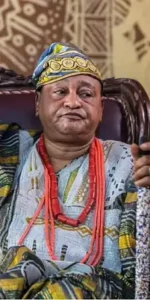 UNGER, FUEL SUBSIDY REMOVAL AND THE ECONOMY SPARK BACKLASH AS NIGERIANS QUESTION HIS ASSESSMENT OF THEIR DAILY STRUGGLES
Veteran actor Jide Kosoko made the remarks during an interview on Talk To B, a podcast hosted by actress Biola Adebayo, published on October 16–17, 2026. While acknowledging that Nigeria is experiencing difficult economic conditions, Kosoko defended President Bola Tinubu’s reforms, blamed successive governments for failing to plan adequately for population growth and urged Nigerians to give the president more time to complete his work. His comments have generated mixed reactions, with critics highlighting the rising cost of living and supporters of his position pointing to the need for long-term economic reforms.
KOSOKO: “THINGS ARE NOT AS BAD AS PEOPLE MAKE THEM SEEM”
Veteran Nollywood actor Jide Kosoko has defended President Bola Ahmed Tinubu amid growing criticism of Nigeria’s economic situation, insisting that the country’s problems are not as bad as some people portray them and expressing confidence that the presidenqt will eventually lead the nation out of its present difficulties. Speaking during an interview on Talk To B, hosted by actress Biola Adebayo and published on October 16–17, 2026, Kosoko argued that successive governments had failed to prepare adequately for Nigeria’s growing population, leaving the current administration to confront longstanding economic problems. “Things are not as bad as some people made us understand,” he said, adding that Tinubu was working to correct the mistakes of previous administrations. The actor further appealed to Nigerians to remain patient, declaring: “My appeal is this. He will take us out of this mess. He is only cleaning up people’s mess.” His remarks have since generated debate about the country’s economic realities, the responsibility of past governments and whether Tinubu deserves more time to deliver on his promises.
The interview has attracted attention because it touches on issues that remain central to public debate in Nigeria: hunger, petrol prices, education costs, government spending and the difficulty many households face in meeting basic needs.
While Kosoko believes the administration is addressing longstanding problems, his comments have also raised questions about how political leaders and their supporters assess economic hardship and whether their assessments reflect the experiences of ordinary Nigerians.
The actor’s position is not new. He has openly supported Tinubu since before the 2023 presidential election, making his latest comments part of a longer record of political support for the president and the ruling All Progressives Congress (APC).
WHY KOSOKO BELIEVES PRESIDENT TINUBU DESERVES MORE TIME
Kosoko argued that Nigeria’s economic difficulties cannot be understood without considering the decisions and failures of previous administrations.
According to him, successive governments did not adequately prepare for the country’s increasing population or make sufficient provision for the demands that population growth would place on infrastructure, employment, education and public services.
He said: “The situation of things now is because the country’s previous governments really did not plan towards the population that was increasing. That was the main problem. They didn’t prepare enough for the gradual population increase.”
He maintained that the consequences of those failures are now being confronted by Tinubu’s administration.
“If they had met these challenges, we might not have so many problems on the ground, which Bola Ahmed Tinubu is now fixing. He’s now fixing the country,” he added.
His argument reflects a position frequently advanced by supporters of economic reform: that Nigeria’s present difficulties developed over many years and cannot fairly be blamed entirely on one administration.
Nigeria has faced longstanding challenges involving infrastructure, public finances, electricity supply, unemployment and the cost of governance. These problems predate Tinubu’s presidency, although the policies introduced by his administration have also significantly influenced the economic conditions Nigerians now experience.
However, acknowledging that previous governments contributed to the country’s problems does not remove the responsibility of the current administration to demonstrate that its policies are working.
For many citizens, the most important questions remain whether food is becoming more affordable, whether incomes can cover essential expenses and whether the economy is creating enough opportunities for people to improve their lives.
That is where Kosoko’s call for patience meets the scepticism of Nigerians who want evidence that the government’s promises are translating into practical benefits.
“BEFORE TINUBU CAME, WHAT WERE THEY EATING?” ACTOR’S COMMENTS ON HUNGER SPARK DEBATE
One of the most contentious parts of Kosoko’s interview was his response to Nigerians complaining about hunger.
The actor questioned the circumstances of some people who say they are struggling financially, asking what they ate and how they survived before Tinubu became president.
He said:
“When you see people saying, I am hungry. Go and check the majority of those people saying that. Before Tinubu came, what were they doing?
“What were they eating? Every year, things change. Those that we understand, we understand. Those that we abuse, we abuse them. I don’t care.”
The remarks have attracted criticism because hunger is a deeply sensitive issue in a country where many households face increasing pressure from food prices, transport costs, housing expenses and other essential bills.
For many Nigerians, the complaint is not necessarily that they had comfortable lives before Tinubu took office. Rather, they argue that the cost of maintaining their previous standard of living has risen considerably.
A worker who could once afford regular meals, transportation to work and school fees for their children may now have to reduce spending, borrow money or depend on relatives to meet those same needs.
Similarly, small business owners face the challenge of paying for fuel, transportation, raw materials and other operating expenses while trying to keep their businesses profitable.
These concerns help explain why some Nigerians found Kosoko’s remarks insensitive.
Critics argue that a person’s financial circumstances before 2023 do not invalidate their present complaints. They believe the government must be held accountable for the economic conditions citizens experience during its tenure, even when some of those problems have deeper historical roots.
On the other hand, Kosoko’s supporters may argue that economic hardship should be examined within a broader historical context and that the current administration should not be blamed for every problem confronting the country.
The disagreement illustrates the difficulty of discussing economic reform in a country where official policy arguments and the daily experiences of ordinary people can appear very different.
FUEL SUBSIDY REMOVAL: KOSOKO SAYS NIGERIANS MUST FACE REALITY
Kosoko also defended the removal of the petrol subsidy, a major policy decision announced by Tinubu during his inauguration on May 29, 2023.
The subsidy had long been a subject of debate in Nigeria, with successive governments struggling to balance the financial cost of maintaining it against concerns about the effect its removal would have on citizens.
Supporters of removal argued that the subsidy placed a substantial burden on public finances and that the money could be better directed towards infrastructure, education, healthcare and other public priorities.
However, the immediate consequences included higher petrol prices and increased pressure on transportation and household budgets.
Kosoko argued that previous administrations had delayed difficult decisions and that Nigerians must now confront the consequences of those choices.
He said: “The free money being used to satisfy you and me needs to be taken back for us to face reality. The reality is that we are not buoyant enough to start enjoying what we are enjoying.”
He maintained that money previously spent on subsidising fuel could instead be used to address other pressing needs.
The actor also pointed to education financing, particularly the Nigerian Education Loan Fund (NELFUND), as an example of a government initiative intended to help students meet educational expenses.
He argued that student loans could ease the financial burden on families and allow them to redirect money towards other needs.
However, the debate over subsidy removal is more complicated than whether the policy was necessary.
Although supporters argue that the reform could improve public finances over time, critics contend that the immediate burden on households has been severe and that the government must provide effective support for vulnerable citizens.
The crucial question is whether the savings and other benefits associated with economic reforms are translating into improvements that ordinary Nigerians can see and feel.
For families struggling to afford food or transport, the promise of future benefits may be difficult to accept without tangible relief in the present.
“LET’S ALLOW THE MAN TO FINISH HIS JOB” KOSOKO CALLS FOR CONTINUITY
Beyond defending Tinubu’s economic policies, Kosoko urged Nigerians to give the president more time to complete his reform agenda.
He argued that political opponents were undermining the administration and that some criticisms were driven by ambition rather than an objective assessment of the government’s performance.
He said:
“Let’s allow the man to finish his job. He’s doing well. Regardless of what his opponents are saying, and at any rate, there is nothing he is doing that is bad before them.”
He further appealed to Nigerians to support the president and his team until they had completed the work they started.
“My appeal is this, please, my people, let’s try and allow Mr President and his team to finish what they started. Honestly, I bet we will all laugh at the end of the day,” Kosoko said.
The actor also expressed concern about what would happen when Tinubu eventually leaves office, arguing that his successor would need to sustain the reform process.
He suggested that the next administration would face its own challenges and would have to be prepared to continue addressing the country’s structural problems.
Kosoko’s position raises an important political question: should a government be judged primarily by the intentions behind its policies or by the results those policies produce?
Supporters of continuity argue that major economic reforms require time and that changing direction too frequently can create further uncertainty.
Critics counter that a government cannot expect indefinite patience from citizens who are struggling to meet basic needs.
Ultimately, the question is not simply whether Tinubu should be allowed to finish his work. It is whether his administration can demonstrate sufficient progress to justify the public’s continued confidence.
KOSOKO URGES BENEFICIARIES OF GOVERNMENT PROGRAMMES TO SPEAK OUT
During the interview, Kosoko called on beneficiaries of the administration’s policies, particularly students receiving assistance through government education programmes, to share their experiences publicly.
He argued that Nigerians should hear directly from people who have benefited from government initiatives instead of relying solely on political arguments.
The appeal reflects his belief that the administration has introduced measures capable of improving people’s lives, even if the benefits are not immediately apparent to everyone.
However, the impact of any government programme must be assessed through more than the existence of beneficiaries or individual success stories.
Important questions include how many people have received assistance, whether the support reaches those who need it most, how effectively the programme is administered and whether it produces lasting benefits.
A student who receives a loan may be able to continue their education, but the wider effectiveness of the scheme also depends on access, repayment conditions, administration and the ability of graduates to find employment.
Similarly, a policy intended to support businesses must ultimately be evaluated by whether it improves access to finance, encourages investment and helps create sustainable jobs.
Kosoko’s call for beneficiaries to speak out may therefore contribute to public discussion, but independent evidence and transparent reporting remain essential to evaluating government performance.
WHO IS JIDE KOSOKO, INSIDE THE LIFE AND CAREER OF THE NOLLYWOOD VETERAN
Jide Kosoko is one of Nigeria’s established veteran actors, with a career spanning more than six decades across theatre, television and film.
Born Babajide Kosoko on January 12, 1954, in Lagos, Nigeria, he comes from the Kosoko royal family of Lagos Island. He is traditionally known as Omoba, a Yoruba title associated with royal birth.
According to the Nigerian Copyright Commission, Kosoko began acting as a child performer in 1964, appearing in the television production Makanjuola. His early start placed him among a generation of performers who helped shape the development of modern Nigerian theatre and film.
EARLY LIFE, EDUCATION AND ENTRY INTO ACTING
Kosoko developed an interest in acting at a young age, at a time when theatre and television productions were important parts of Nigeria’s entertainment culture.
He was inspired by the work of legendary Nigerian theatre practitioner Hubert Ogunde, whose productions helped establish modern Yoruba theatre and influenced generations of performers.
Kosoko’s early experiences exposed him to the demands of stage performance and helped him build the skills that would later define his career.
He studied business administration at Yaba College of Technology in Lagos, combining his formal education with his growing involvement in entertainment.
In 1972, he established his own theatre group, an important step that allowed him to expand his work beyond acting into production and the organisation of theatrical performances.
HIS RISE THROUGH YORUBA CINEMA AND NOLLYWOOD
Over the decades, Kosoko became known for his versatility and ability to portray a wide range of characters.
His roles have included family patriarchs, traditional rulers, wealthy businessmen, community leaders and other complex characters in dramatic productions.
He has worked in both Yoruba-language films and English-language productions, helping him build a broad audience across Nigeria.
His film credits include Ti Oluwa Ni Ile, Asewo to Re Mecca, Abeni, The Meeting, Passport and Love Is War.
He has also appeared in television productions, including The New Masquerade and Jenifa. His work across different formats has helped maintain his visibility across generations of Nigerian audiences.
A CAREER BEYOND ACTING
Kosoko’s contributions to the entertainment industry extend beyond his work in front of the camera.
He has worked as a director and producer, participating in different aspects of film and theatre production.
His experience across generations of Nigerian entertainment has also made him a recognisable industry elder, with a career that spans the period before the modern Nollywood industry emerged and its subsequent growth.
The Nigerian Copyright Commission records that Kosoko received a Lifetime Achievement Award at the City People Movie Awards in 2017 and 2021. He has also received other industry honours, including an Industry Merit Award at the Africa Magic Viewers’ Choice Awards in 2016.
HIS FAMILY AND PUBLIC LIFE
Kosoko’s family is also connected to the entertainment industry. His children include actresses Sola Kosoko and Bidemi Kosoko, who have pursued careers in acting.
Beyond his work in film, Kosoko has maintained an interest in Nigerian politics and has openly expressed support for Tinubu.
In June 2022, he joined other Yoruba film stars in endorsing Tinubu, who was then the presidential candidate of the APC.
His political support is therefore not a new development arising from the latest interview. It forms part of a longer relationship with the president and his political movement.
This background is relevant when examining his latest comments because it helps explain the political context of his defence of the administration.
However, his political affiliation does not, by itself, establish whether his assessment of the economy is right or wrong. His claims must still be considered alongside available evidence and the experiences of Nigerians.
NIGERIANS REACT: “WE WERE EATING BETTER BEFORE TINUBU”
Kosoko’s comments attracted strong criticism online, particularly from Nigerians who believe the economic situation has worsened since Tinubu assumed office.
A report published on October 16, 2026, documented reactions from social media users who challenged the actor’s defence of the administration. Their responses focused on the cost of living, fuel prices and what they viewed as a disconnect between the actor’s comments and the daily experiences of ordinary citizens.
Among the reported reactions were the following:
@blessedafricanqueens challenged Kosoko’s remarks about hunger, writing:
“Eni kure .. I dey chop well before Tinubu .. chop Chicken nd turkey .. nah fuel I dey use the money buy now.”
The commenter argued that life had been more affordable before the current administration, particularly in relation to food and fuel expenses.
@teeveed questioned what the commenter considered an inconsistency in Kosoko’s political position, writing:
“You were at the protest ground of subsidy removal during Jonathan but you are here supporting Tinubu even when things have gone so bad even more than 100 times we had it under Jonathan….”
The comment challenged the actor over his position on subsidy removal and the economic pressures the commenter believes Nigerians are experiencing.
@reimestores expressed disappointment with Kosoko’s intervention, writing:
“Baba make we no swear for you….we love you in film pls stay there abeg…na U na dey confuse this president.”
“Which mess,who created the mess at first?”
Sometimes, children has to take their parents inside and educate them”
“When corruption pay your bills, truth become a threat”
The commenter suggested that Kosoko should concentrate on his entertainment career rather than publicly defend the president.
@ayangbridget criticised the actor’s political position, writing:
“These Yoruba Nollywood actors ehn, I dnt know if U all have conscience.”
The response reflected frustration with entertainers who publicly support the administration.
@omolade_01_06 expressed disbelief, commenting:
“I don’t even know what to say to this Baba.”
Similarly, @omodunbiadeola reacted:
“I don’t even know what to type.”
These comments illustrate the strength of the criticism directed at Kosoko, particularly from people who believe his remarks do not adequately acknowledge the financial difficulties many households face.
However, social media reactions should not be treated as a representative survey of Nigerian public opinion. They demonstrate that the comments generated controversy, but they do not establish how all Nigerians feel about the actor’s position.
WHY SOME NIGERIANS MAY AGREE WITH KOSOKO
Although the available reports document several critical reactions to Kosoko’s comments, they do not provide a comparable set of independently verified, named social media comments explicitly supporting his latest remarks.
It would therefore be misleading to invent quotations or attribute unverified statements to Nigerians.
Nevertheless, several arguments may explain why some citizens agree with his position.
Like Our Story ? Donate to Support Us, Click Here
You want to share a story with us? Do you want to advertise with us? Do you need publicity/live coverage for product, service, or event? Contact us on WhatsApp +16477721660 or email Adebaconnector@gmail.com