
“I Do Not Want to Go Back to Nigeria” Author Chimamanda Adichie’s Painful Break With Home
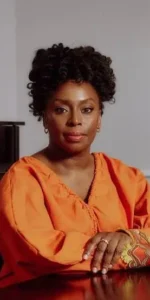
There is a particular kind of grief that doesn’t just take a person from you it takes a place too. That is the story sitting underneath the headlines this week about Chimamanda Ngozi Adichie, one of the most celebrated writers Nigeria has ever produced, and her admission that the country she has spent a career writing into the world no longer feels like somewhere she can call home.
It’s a striking reversal for a woman whose entire identity as a storyteller was built, brick by brick, out of Nigerian soil.
What She Actually Said
Speaking to The New York Times in an interview published in the second week of September 2026, author Chimamanda Adichie was asked a question that, for most of her life, would have had an easy answer: did Nigeria still feel like somewhere close to her heart? She didn’t soften it.
“My feelings toward Nigeria have changed,” she said.
Pressed on whether she saw herself returning, her answer was blunter still.
“I do not want to go back to Nigeria.”
Four sentences. No embellishment. But coming from a woman who has spent two decades insisting in interviews, essays, and the pages of Half of a Yellow Sun and Americanah that Nigeria was the reason she could write at all, the words landed like a door closing.
She didn’t stop there. Talking about the months since her son’s death, she described a kind of emotional fog that hasn’t lifted:
“I mean, it is so surreal, all of this. I still can’t believe we’re talking about my son who died,” she said. “You’re going through something, but you also feel like you’re outside of it.”
The Night That Changed Everything
To understand why Adichie said what she said, you have to go back to the ordinary, terrifying way tragedy so often begins: with a fever that wouldn’t break.
The family was reportedly in Nigeria over the Christmas period when her 21-month-old son, Nkanu Nnamdi, one of her twin boys, fell ill. Her husband, physician Dr. Ivara Esege, started him on antibiotics at home, the way any parent-doctor would. But Nkanu didn’t improve. So they did what any worried parent does next: they took him to the hospital.
At Euracare Multi-Specialist Hospital in Lagos, doctors needed a clearer picture of what was going on. That meant an MRI and for a toddler, that meant sedation. Nkanu was given propofol, a common anesthetic, to keep him still during the scan. Something went wrong. He suffered cardiac arrest. He died the following day.
Adichie has described the moment a doctor came to find her afterward not with composure, but in what she called “a state of panic.” What he told her is a sentence she says she will carry for the rest of her life:
“Well, look, they gave him too much Propofol.”
She has said those were his exact words, and that she will “never forget” them “until the day I die.”
This wasn’t the first time the public heard about it. Back in June 2026, months before this interview, Adichie had already gone public posting on social media to allege medical negligence in her son’s care. That allegation has since become something more formal: a coroner’s inquest into the circumstances of his death is reportedly still ongoing, and Adichie and her husband have said they are pushing for accountability from the hospital rather than pursuing a lawsuit.
By the time she sat down with the Times, roughly six months had passed since Nkanu’s death and, by her account, roughly six months since she had last set foot in Nigeria.
A Writer Who Made a Career Out of Loving This Country
It’s worth pausing on who is saying this, because it’s precisely what makes the statement so heavy. Chimamanda Ngozi Adichie isn’t a casual observer of Nigeria; she is arguably its most internationally recognized literary voice. Her novel Half of a Yellow Sun, set against the backdrop of the Biafran war, won the Women’s Prize for Fiction in 2007 and was later named the best book to win that prize across its first twenty-five years, a one-off honor reserved for the best of the best. Purple Hibiscus and Americanah cemented her as a defining voice of contemporary African literature, and her 2009 TED Talk, “The Danger of a Single Story,” has been watched by tens of millions of people, becoming one of the platform’s most enduring pieces of content on the subject of narrative, identity, and Africa’s place in the Western imagination.
She’s a MacArthur Fellow, an inductee of the American Academy of Arts and Sciences, and in 2019 became the first African to deliver the Class Day address at Yale, where she also received an honorary degree. She has long described herself as a feminist, and her writing regardless of subject has almost always circled back to the same axis: what it means to be Nigerian, to leave Nigeria, to return to it, to carry it inside you no matter where you live.
That’s what makes “I do not want to go back” so jarring. This is a woman who once said Nigeria gave her “everything” she needed to become a writer. For most of her life, distance from Nigeria was geographic, never emotional. Now, for the first time, it sounds like both.
She hasn’t fully closed the door, though. Adichie has said her surviving children may be the one thing that could bring her back her daughter, she noted, still calls Nigeria her “happy place.” It’s a small, aching detail: even as the mother grieves her way out of a country, her daughter is still holding onto it as somewhere good.
How People Are Responding
News like this doesn’t stay contained to one interview it ripples. And the reaction, as with most things this raw, hasn’t moved in one direction.
Those who feel for her. A large part of the public conversation has focused less on Nigeria as an abstract idea and more on what actually happened to her son. For many, Adichie’s words read less like a rejection of a country and more like a mother naming her pain honestly and using her platform to demand answers from a hospital that, in her account, made a fatal error. This strand of reaction has tied her story to a broader, long-simmering frustration many Nigerians already feel about inconsistent standards of care in private hospitals and the near-total lack of recourse families have when something goes wrong.
Critics Fires Back
Those who push back. Others have taken issue with the scale of the statement arguing that the failure of one hospital, however devastating, shouldn’t be allowed to color an entire nation, especially when the words come from someone with Adichie’s global reach. Some have pointed to the apparent tension in her own account: she says she doesn’t want to return, yet acknowledges her children remain tied to the country, and her daughter still calls it home. To these critics, that suggests a wound still very much in motion, one that may soften, not one that’s necessarily final.
Review From Neutral Voices
Those just sitting with it. Then there’s the largest, quietest group: people who aren’t arguing either side, just absorbing the story for what it plainly is a mother describing the unbearable, and a country watching one of its most famous daughters grieve in public. Much of this reaction is simply waiting, like Adichie herself seems to be, for the coroner’s inquest to run its course before anyone draws firm conclusions about the hospital or what comes next.
In summary, strip away the headlines and what’s left is something much smaller and much harder: a woman who built a life’s work on a place, and then that place became the site of the worst thing that ever happened to her. Adichie’s words weren’t a political statement or a public relations moment; they were what grief sounds like when it’s asked to speak on the record.
Nigeria, for now, is not home. But it isn’t entirely gone from her either, not while her daughter still calls it her happy place, and not while an inquest still owes her family an answer for what happened to Nkanu. Whether time, or accountability, or her own children eventually pull her back is something not even she seems ready to answer yet.
Like Our Story ? Donate to Support Us, Click Here
You want to share a story with us? Do you want to advertise with us? Do you need publicity/live coverage for product, service, or event? Contact us on WhatsApp +16477721660 or email Adebaconnector@gmail.com