
Cornrows have become a group most loved for ladies of each culture over the most recent 10 years. While it used to be worn by youngsters, particularly youthful African and African American young ladies, the style has gotten broadly well known across ladies all things considered.
In any case, many don’t have the foggiest idea about the profound and rich history of the haircut that spared the lives of many. In addition, they don’t know about its job in the opportunity battles which have prompted the freedoms we currently appreciate.
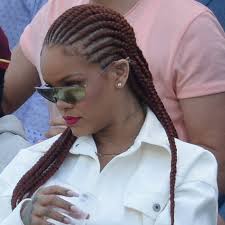
Cornrows have long been a facet of African beauty and life. In many African societies, braid patterns and hairstyles indicate a person’s community, age, marital status, wealth, power, social position, and religion. In the Caribbean, the style may be referred to as cane rows to represent “slaves planting sugar cane”, and not corn.
The style consists of braiding the “hair very close to the scalp in an underhand, upward motion in order to create a single line of raised row, creating the cornrow”.
Blackdoctor.org writes on the history of cornrows:
“Depictions of women with cornrows have been found in Stone Age paintings in the Tassili Plateau of the Sahara, and have been dated as far back as 3000 B.C. There are also Native American paintings as far back as 1,000 years showing cornrows as a hairstyle. This tradition of female styling in cornrows has remained popular throughout Africa, particularly in the Horn of Africa and West Africa.

Emperor of Ethiopia (1872–89)
Historically, male styling with cornrows can be traced as far back as the early nineteenth century to Ethiopia, where warriors and kings such as Tewodros II and Yohannes IV were depicted wearing cornrows.”
Now to its role during the Transatlantic Slave Trade:
During the Atlantic Slave Trade, many slaves were forced to shave their hair to be more ‘sanitary’ and to also move them away from their culture and identity.
But not all enslaved Africans would not keep their hairs cut. Many would braid their hairs tightly in cornrows and more “to maintain a neat and tidy appearance”.
Enslaved Africans also used cornrows to transfer and create maps to leave plantations and the home of their captors. This act of using hair as a tool for resistance is said to have been evident across South America.
It is most documented in Colombia where Benkos Bioho, a King captured from Africa by the Portuguese who escaped slavery, built San Basilio de Palenque, a village in Northern Colombia around the 17thcentury. Bioho created his own language as well as intelligence network and also came up with the idea to have women create maps and deliver messages through their cornrows.
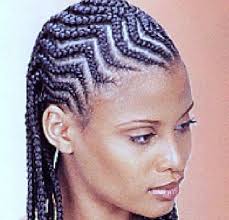
The site Edtimes explains,
“Since slaves were rarely given the privilege of writing material or even if they did have it, such kind of messages or maps getting in the wrong hands could create a lot of trouble for the people in question, cornrows were the perfect way to go about such things.
No one would question or think that one could hide entire maps in their hairstyle, so it was easy to circulate them without anyone finding out about it.”
Afro-Colombia, Ziomara Asprilla Garcia, further explained to the Washington Post in the article, Afro-Colombian women braid messages of freedom in hairstyles:
“In the time of slavery in Colombia, hair braiding was used to relay messages. For example, to signal that they wanted to escape, women would braid a hairstyle called departes. “It had thick, tight braids, braided closely to the scalp and was tied into buns on the top.
And another style had curved braids, tightly braided on their heads. The curved braids would represent the roads they would [use to] escape. In the braids, they also kept gold and hid seeds which, in the long run, helped them survive after they escaped.”
Garcia said with satisfaction that there has been a resurgence of braided hairstyles in Colombia in recent years. But this reality is not only evident in Colombia but all around the world.
Like Our Story ? Donate to Support Us, Click Here
You want to share a story with us? Do you want to advertise with us? Do you need publicity/live coverage for product, service, or event? Contact us on WhatsApp +16477721660 or email Adebaconnector@gmail.com




Steroids vs. Testosterone: What’s The Difference?
Understanding the differences between steroids and testosterone is crucial for anyone looking to enhance their physical performance
or muscle growth. While both substances play a role in muscle
building, they work differently and have distinct effects on the body.
This article will explore the key aspects of each, including their functions, benefits, risks, and legal
status.
Steroids and testosterone are both hormone-based supplements, but they differ fundamentally
in their source and function.
– ** Steroids: ** These are synthetic compounds that mimic the effects of the body’s natural hormones, primarily
testosterone. They are not produced by the body but are used externally to boost muscle growth, strength,
and performance.
– ** Testosterone: ** This is a naturally occurring hormone
produced by the testes in men. It plays a vital role in male characteristics, including muscle growth,
fat loss, libido, and energy levels.
The primary difference lies in their source and how they interact with
the body. Steroids are exogenous (external) hormones, while testosterone is endogenous
(produced within the body).
When comparing steroids and testosterone, several
key points emerge:
1. ** Mechanism of Action: **
– Steroids bind to androgen receptors in muscle tissue, triggering protein synthesis and promoting
muscle growth.
– Testosterone also binds to androgen receptors but works through a more regulated feedback system involving the hypothalamus, pituitary gland, and testes.
2. ** Dose and Duration: **
– Steroids are typically used in lower doses over an extended period to minimize negative effects.
– Testosterone levels fluctuate naturally within the body,
peaking during peak physical condition and declining with age.
3. ** Health Considerations: **
– Steroid use can lead to serious health risks, including
liver damage, cardiovascular issues, and psychological effects.
– Misuse of testosterone supplements can result in side effects like acne, hair loss,
and mood swings, although these are generally milder than steroid-related issues.
4. ** Performance Enhancement: **
– Both substances are used by athletes and bodybuilders to enhance performance and muscle growth, but they achieve this differently.
– Steroids provide a more rapid and pronounced effect on muscle mass and strength.
– Testosterone works within the body’s natural processes, potentially offering a
more sustainable approach to fitness.
The effects of steroids and testosterone are similar in that both can enhance muscle growth and physical performance.
However, they differ in how they achieve these results.
– ** Steroids: ** They directly stimulate muscle protein synthesis, leading to faster muscle growth and increased strength.
This effect is often more immediate and significant compared to testosterone.
– ** Testosterone: ** It facilitates muscle growth by supporting processes like fat loss and energy production, which
indirectly contribute to muscle building. The effects are more
aligned with natural body regulation.
Both substances offer potential benefits for those looking to improve
their physical appearance and performance:
– ** Steroids: ** Provide a rapid increase in muscle mass and strength, often noted in short periods
of use.
– ** Testosterone: ** Supports natural muscle growth
by enhancing fat loss, boosting libido, and increasing energy levels.
It can be beneficial for overall health when used appropriately.
While both have potential benefits, they also carry risks:
– ** Steroids: ** Misuse can lead to severe health complications, including liver damage,
cardiovascular issues, and psychological effects like paranoia or aggressive behavior.
– ** Testosterone: ** Excessive or improper use can result in side effects such as
acne, hair loss, and mood swings. Synthetic testosterone derivatives may pose additional risks.
The legal status of these substances varies:
– ** Steroids: ** Are classified as controlled substances and require a valid prescription for certain medical uses, such
as hormone replacement therapy.
– ** Testosterone: ** Can be obtained legally through
prescription for therapeutic use, but misuse can lead to legal consequences.
In summary, steroids and testosterone are both powerful tools for enhancing
muscle growth and performance, but they operate differently in the body.
Steroids offer rapid results through exogenous hormone replacement, while testosterone supports the body’s natural processes.
Both have potential benefits and risks, and their use should be approached with
caution and under professional guidance.
Understanding the differences between steroids and testosterone is essential for making
informed decisions about your health and performance.
Always consult with a healthcare provider before starting any new supplement regimen.
Also visit my web blog; winstrol v steroid