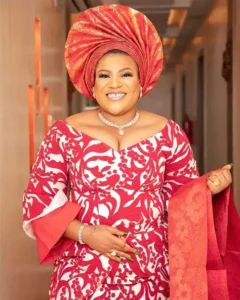
The Anambra State Government has rejected a chieftaincy title reportedly conferred on the Minister of State for Foreign Affairs, Ambassador Bianca Odumegwu-Ojukwu, declaring the award invalid and illegal.
In an official statement issued on December 31, 2025, and signed by the Commissioner for Local Government, Chieftaincy and Community Affairs, Tony-Collins Nwabunwanne, the government said the title was conferred by an individual who is “not a recognised traditional ruler in Anambra State.”
The government stated: “The said chieftaincy title is fake, unknown to the customs and traditions of Anambra State, and was conferred by an impostor.”
It further warned that “no person or group has the authority to confer chieftaincy titles outside the framework of the state’s Traditional Rulers Law.”
According to the government, the individual who presided over the ceremony, Austin C. Ndigwe, is not recognised as a traditional ruler in Awka or any part of the state. The statement added: “The authentic traditional ruler of Awka is alive and duly recognised. Any claim to the contrary is misleading and unlawful.”
Minister Bianca Ojukwu’s Reaction and the Igu Aro Ceremony
Bianca Ojukwu, in posts on her verified social media accounts ahead of the controversy, shared that she had been bestowed with the title “Anyanwu N’Awalu Ora” translated roughly as “The Light of the Community” at the Igu Aro Cultural Festival in Awka. The ceremony was meant to honour her contributions to the Igbo nation and Nigeria at large.
Her post described the title as conferred by His Majesty Obi Austin Ndigwe (MON) whom she referred to as “Supreme Commander of Awka Ancient Kingdom,” a designation that does not legally exist under recognised traditional rulership structures.
After the Anambra government’s statement, Mrs Ojukwu has not publicly recanted the posts as of the latest reports. Supporters of the ceremony maintain the awarding event had taken place with community attendance and celebration, but the government insists the traditional protocol and certification were not followed.
The Ceremony that sparked the controversy
The event took place during the Igu Aro Cultural Festival, an annual traditional celebration in Awka, Anambra State, which marks the beginning of the new year and reflects on the community’s cultural heritage.
The festival was a peaceful cultural gathering attended by community elders, youths, women groups, and invited guests. Participants were dressed in traditional Igbo attire, while cultural dancers, drummers, and masquerades performed to entertain the audience. Traditional music, dance displays, and ceremonial activities created a calm and festive atmosphere.
During the event, local customs were observed, refreshments were shared, and individuals considered worthy of honour were publicly acknowledged. The presentation of a chieftaincy title to minister Bianca Odumegwu-Ojukwu formed part of these activities and was received with applause by those present.
Overall, the celebration was conducted in a respectful and cultural manner, in line with the traditions associated with the Igu Aro festival.
Profile of Minister Bianca Odumegwu-Ojukwu
Minister Bianca Odumegwu-Ojukwu is a Nigerian diplomat, lawyer, and politician. She was appointed Minister of State for Foreign Affairs in October 2024.
She previously served as Nigeria’s Ambassador to Spain and has represented the country in several international diplomatic engagements. Minister Bianca is also widely known as a former beauty queen, having won the Most Beautiful Girl in Nigeria (MBGN) title in 1989.
She is the widow of the late Chukwuemeka Odumegwu-Ojukwu, former Biafran leader and founder of the All Progressives Grand Alliance (APGA), and remains a prominent figure within the party’s leadership structure.
Public Reactions and Opinions
Reactions to the controversy have been mixed across political and cultural circles.
Some residents and legal analysts have supported the government’s action, arguing that traditional institutions must operate within the law. One commentator noted that “respect for culture must go hand-in-hand with respect for legal authority.”
Others, however, believe the rejection was unnecessary and politically charged, insisting that cultural honours should not be reduced to bureaucratic disputes. Social media discussions have also raised concerns about the growing tension between traditional practices and state regulation.
At the end, the rejection of minister Bianca Ojukwu’s chieftaincy title by the Anambra State Government has reopened debate over who holds authority in traditional matters and how cultural honours should be regulated. While the government insists it acted to protect the integrity of recognised institutions, the silence from the minister has left the matter open to public interpretation.
Until an official response is issued by minister Bianca Ojukwu or further clarification emerges, the controversy remains a significant intersection of culture, law, and politics in Anambra State.
Like Our Story ? Donate to Support Us, Click Here
You want to share a story with us? Do you want to advertise with us? Do you need publicity/live coverage for product, service, or event? Contact us on WhatsApp +16477721660 or email Adebaconnector@gmail.com